ภาษาไทย อ่านด้านล่าง
Many organizations invest significant time and effort in collecting feedback. Whether through 360-degree assessments, employee surveys, or performance reviews, the intention is clear: to help people grow and improve.
Yet, despite the abundance of feedback, meaningful behavioral change does not always follow. WHY?
Because feedback is only the visible part of the story..
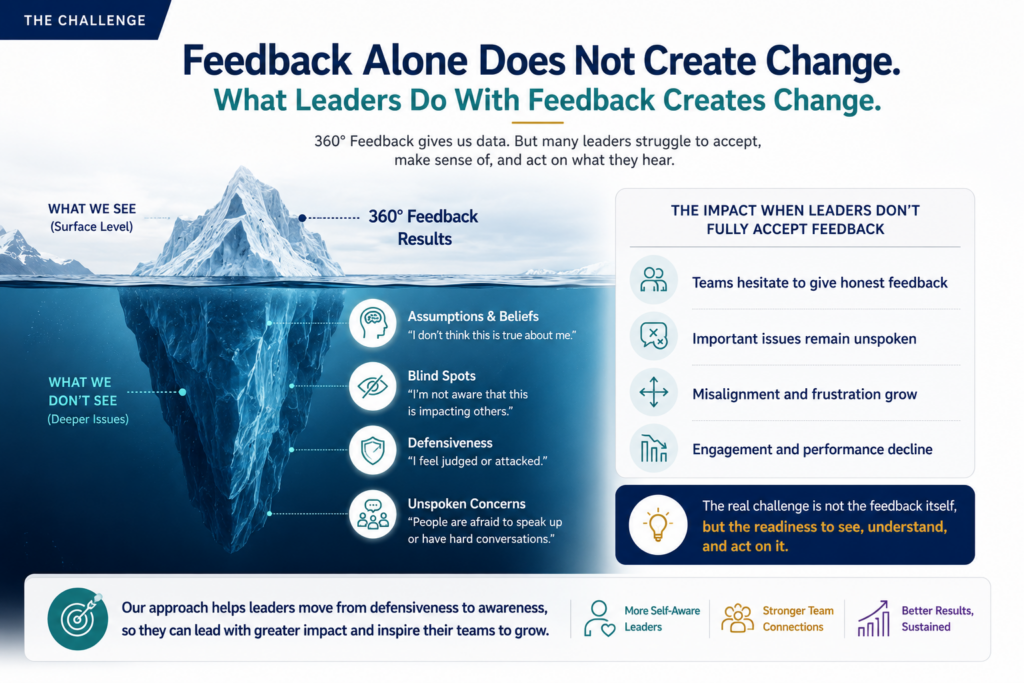
The Iceberg Beneath Feedback : When leaders receive feedback, what they see is often just the tip of the iceberg.
They see the ratings.
They see the comments.
They see how others perceive them.
What remains unseen are the thoughts and emotions beneath the surface:
- Personal beliefs and assumptions
- Existing self-perceptions
- Emotional reactions
- Concerns about credibility or fairness
- Fear of judgment or failure
- Unrecognized blind spots
These hidden factors often determine how feedback is interpreted—and whether it is ultimately accepted, ignored, or challenged.
The Real Challenge Is Not Receiving Feedback
In our work with leaders across organizations, we have observed that the greatest challenge is rarely the feedback itself. The challenge is making sense of it.
When feedback aligns with how leaders see themselves, it is usually easy to accept. BUT, when feedback contradicts deeply held beliefs or self-perceptions, it can trigger resistance, defensiveness, or dismissal. This is a natural human response.
The question is not whether leaders will agree with every piece of feedback. The more important question is:
“Can leaders remain curious enough to explore what the feedback might be telling them?“
From Feedback to Reflection : This is where reflection becomes critical.
Feedback provides data.
Reflection creates understanding.
Without reflection, feedback remains information.
With reflection, feedback becomes insight.
The most effective leaders are not necessarily those who receive the most positive feedback. They are the ones who are willing to pause, explore different perspectives, and learn from experiences that may be uncomfortable.
From Reflection to Ownership
Awareness alone is not enough.
Real change happens when leaders take ownership of what they learn.
Ownership means moving beyond questions such as:
- “Is this feedback accurate?”
- “Do I agree with this feedback?”
Toward questions such as:
- “What can I learn from this?”
- “What impact might my behavior be having on others?”
- “What small change could make a meaningful difference?”
This shift—from evaluation to exploration, from defensiveness to curiosity—is often where leadership growth begins.
Building a Culture That Goes Beyond Feedback. Organizations often focus on improving the quality of feedback.
While important, that is only part of the equation. Equally important is creating opportunities for leaders and teams to digest feedback, reflect on its meaning, and translate insights into action.
Because feedback alone does not create change.
Reflection creates insight.
Ownership creates change.
Thai Content :
Feedback เพียงอย่างเดียว ไม่ได้สร้างการเปลี่ยนแปลง
หลายองค์กรลงทุนทั้งเวลาและทรัพยากรจำนวนมากกับการทำ Feedback ไม่ว่าจะเป็น 360 Feedback, Employee Survey หรือ Performance Review
ด้วยความตั้งใจเดียวกัน คืออยากให้ผู้คนเติบโตและพัฒนา แต่ในความเป็นจริง เรากลับพบว่า การได้รับ Feedback ไม่ได้นำไปสู่การเปลี่ยนแปลงเสมอไป
เพราะสิ่งที่เรามองเห็นจาก Feedback อาจเป็นเพียง “ส่วนยอดของภูเขาน้ำแข็ง” เท่านั้น
สิ่งที่อยู่ใต้ Feedback เมื่อผู้นำได้รับ Feedback สิ่งที่มองเห็นได้คือ
- คะแนนที่ได้รับ
- ความคิดเห็นจากผู้อื่น
- มุมมองที่คนรอบข้างมีต่อเรา
แต่สิ่งที่มักมองไม่เห็น คือสิ่งที่อยู่ลึกลงไปใต้ผิวน้ำ
- ความเชื่อที่เรามีต่อตนเอง
- ประสบการณ์ในอดีต
- ความคาดหวังที่มีต่อตัวเอง
- ความกังวลหรือความไม่มั่นใจ
- ปฏิกิริยาทางอารมณ์เมื่อได้รับความคิดเห็นที่ไม่คาดคิด
- Blind Spots ที่เราอาจไม่เคยมองเห็น
สิ่งเหล่านี้ต่างหากที่เป็นตัวกำหนดว่า Feedback จะถูกนำไปใช้ต่อ หรือถูกปฏิเสธไปในที่สุด
ความท้าทายที่แท้จริง ไม่ใช่การได้รับ Feedback
จากประสบการณ์การทำงานกับผู้นำในหลากหลายองค์กร เราพบว่าความท้าทายที่แท้จริงมักไม่ใช่คุณภาพของ Feedback
แต่เป็นความสามารถในการทำความเข้าใจกับ Feedback ที่ได้รับ
เมื่อ Feedback สอดคล้องกับภาพที่เรามองตัวเอง เรามักเปิดรับได้ไม่ยาก
แต่เมื่อ Feedback สะท้อนบางสิ่งที่ขัดกับความเชื่อหรือภาพลักษณ์ที่เรามีต่อตนเอง เราอาจรู้สึกไม่สบายใจ ตั้งคำถาม หรือแม้แต่ปฏิเสธมัน
ซึ่งเป็นปฏิกิริยาที่เกิดขึ้นได้กับทุกคน
คำถามสำคัญจึงไม่ใช่
“Feedback นี้ถูกต้องหรือไม่”
แต่เป็น “Feedback นี้กำลังพยายามบอกอะไรกับเรา”
จาก Feedback สู่ Reflection
Feedback คือข้อมูล แต่ข้อมูลเพียงอย่างเดียวไม่ได้สร้างการเรียนรู้
สิ่งที่ทำให้ Feedback มีคุณค่าคือการหยุดคิด ทบทวน และเปิดมุมมองใหม่ให้กับตัวเอง ผู้นำที่เติบโตได้ดี ไม่ใช่คนที่ได้รับแต่ Feedback เชิงบวก แต่คือคนที่สามารถอยู่กับ Feedback ที่ท้าทาย และใช้มันเป็นโอกาสในการเรียนรู้ เพราะการพัฒนาเริ่มต้นจากการตั้งคำถามกับตัวเอง ไม่ใช่การรีบปกป้องตัวเอง
จาก Reflection สู่ Ownership
เมื่อเกิดความเข้าใจแล้ว ขั้นตอนต่อไปคือการลงมือเปลี่ยนแปลง การเป็นเจ้าของการพัฒนาของตนเอง (Ownership) หมายถึงการเปลี่ยนจากคำถามว่า
- ฉันเห็นด้วยกับ Feedback นี้หรือไม่?
- คนที่ให้ Feedback เข้าใจฉันจริงหรือเปล่า?
ไปสู่คำถามว่า
- ฉันเรียนรู้อะไรจากเรื่องนี้ได้บ้าง?
- พฤติกรรมของฉันส่งผลต่อคนรอบข้างอย่างไร?
- ถ้าจะเริ่มเปลี่ยนแปลงเพียงเรื่องเดียว เรื่องนั้นควรเป็นอะไร?
หลายครั้ง การเติบโตของผู้นำไม่ได้เริ่มต้นจากคำตอบ แต่เริ่มต้นจากความกล้าที่จะสำรวจคำถามเหล่านี้อย่างจริงใจ
เมื่อองค์กรต้องการมากกว่าแค่ Feedback
องค์กรจำนวนมากให้ความสำคัญกับการพัฒนาคุณภาพของ Feedback ซึ่งเป็นเรื่องสำคัญ แต่สิ่งที่สำคัญไม่แพ้กัน คือการสร้างพื้นที่ให้ผู้คนได้ทำความเข้าใจ สะท้อนคิด และเปลี่ยน Feedback ให้กลายเป็นการลงมือทำ
เพราะ Feedback เพียงอย่างเดียว ไม่ได้สร้างการเปลี่ยนแปลง
การสะท้อนคิด (Reflection) สร้างความเข้าใจ
และการเป็นเจ้าของการเปลี่ยนแปลง (Ownership) คือสิ่งที่ทำให้การเปลี่ยนแปลงเกิดขึ้นจริง
Feedback คือข้อมูล
Reflection สร้างความเข้าใจ
Ownership สร้างการเปลี่ยนแปลง